


Quick answer: A higher helix angle can make milling feel smoother and can help chip flow, but it also changes axial force. A lower helix angle is often more rigid and can be safer for slotting, thin floors, and setups where upward pull or tool deflection is a concern.
Helix angle is the angle of the flute relative to the tool axis. It is not just a visual feature. It affects how the cutting edge enters the material, how chips leave the cut, how much axial force the tool creates, and how stable the cutter feels in a specific holder and workpiece.
What helix angle changes in milling
A helical flute helps the cutting edge enter the workpiece gradually. That smoother entry can reduce impact compared with a straight flute and can improve chip evacuation. It also changes the direction of cutting forces. Depending on the hand of the flute and cutting direction, the tool may tend to pull out of the holder or press into the spindle.
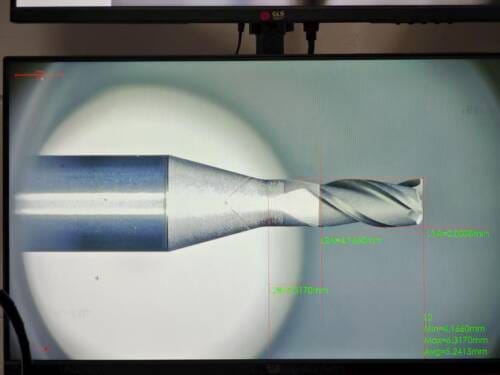
This is why helix angle should be treated as a process choice, not a simple “higher is better” decision. The workpiece material, wall thickness, tool overhang, holder type, coolant, and toolpath all matter.
When a high-helix end mill helps
- Finishing and semi-finishing: Smoother edge entry can help surface finish when the setup is stable.
- Sticky or ductile materials: Better chip flow can help reduce chip packing when the flute, coating, and coolant are suitable.
- High-speed side milling: A high-helix design can cut freely when radial engagement is controlled.
- Non-ferrous finishing: In some aluminum and composite applications, a suitable PCD end mill or polished flute design may be reviewed for burr and finish control.
When a lower helix angle may be safer
Lower helix cutters usually leave more core strength in the tool, depending on flute count and design. They can be useful for heavy slotting, short rigid cuts, brittle materials, or applications where the part is thin and axial pull could distort the floor or wall.
A common shop-floor example is a thin-bottom pocket. A high-helix tool may cut smoothly, but the axial component can pull on the thin floor. In that case, a lower helix, smaller radial width, sharper edge, and better support may be safer than simply increasing speed.
Do not judge helix angle alone
Two end mills with the same helix angle can behave differently because of core diameter, flute count, edge preparation, coating, rake, and runout. Variable pitch and variable helix designs can also help reduce vibration in some conditions. For carbide tools, the best option is usually selected from the full cutting system.
What to include in a custom end mill request
For a custom tool review, send the material, hardness, milling operation, slot or wall depth, radial engagement, required finish, tool diameter, holder type, and maximum overhang. If the current issue is chatter, burr, poor finish, or tool pull-out, include the current helix angle and flute count if known. The HEYI RFQ form is the best place to attach the drawing and current cutting data.