


Quick answer: Peck drilling is useful when chips cannot evacuate safely, especially in deeper holes or gummy materials. But excessive retracts can increase rubbing, noise, cycle time, heat cycling, and tool load. The peck strategy should match hole depth, material, coolant, drill type, and chip shape.
The source case involved a shop that kept retracting frequently because the drill was expensive and the material was difficult. The result was not safer drilling: the sound changed, machine load increased, and the process became unstable. That is a common pattern when pecking is used as a reflex instead of a controlled chip-evacuation strategy.
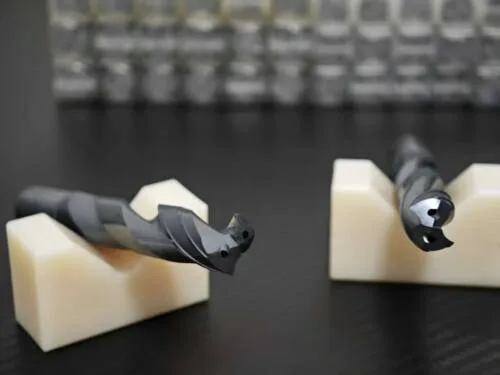
What peck drilling is meant to solve
Peck drilling breaks or evacuates chips by periodically retracting the drill. It can help when a hole is deep, chips are long, coolant does not reach the cutting edge, or the material is gummy enough to pack the flutes.
For shallow, stable holes with a suitable drill and good coolant, constant-feed drilling may be more efficient. For deeper holes, especially beyond several drill diameters, chip evacuation becomes more important and pecking may be needed.
Why too many pecks can hurt carbide drills
Every retract changes the cutting condition. If the drill repeatedly leaves and re-enters the cut, the edge can rub, re-cut chips, or see unstable loading. The process may sound safer because each peck is small, but the drill can spend more time rubbing than cutting.
Excessive pecking can also drag chips along the hole wall, affect hole finish, and increase cycle time. The goal is not the maximum number of pecks. The goal is controlled chip evacuation with the fewest interruptions that keep the hole stable.
When peck drilling is usually worth reviewing
- Hole depth is beyond the drill’s comfortable chip-evacuation range.
- Material creates long or stringy chips, such as some stainless steels, aluminum alloys, or mild steels.
- The machine does not have through-tool coolant or coolant pressure is weak.
- Chip packing causes load spikes, noise, oversized holes, poor finish, or drill breakage.
- The drill manufacturer recommends a specific cycle for the depth and material.
Through-coolant drills change the decision
A through-coolant carbide drill can evacuate chips more reliably in production drilling. Tooling guidance often recommends coolant-fed drills for deeper production holes because coolant reaches the cutting edge and helps move chips through the flutes.
That said, through-coolant is not magic. If the coolant pressure is low, the holder leaks, the drill is too long, or the chip shape is wrong, the cycle may still need review. A through-coolant carbide drill should be paired with the right holder, machine capability, cutting data, and chip control plan.
G83, G73, and high-speed pecking
Normal peck drilling cycles fully retract more than high-speed peck cycles. High-speed pecking can use smaller retract movements to break chips while keeping the drill closer to the cut. The right cycle depends on the machine control, coolant, material, drill style, and hole depth.
In practice, a deep hole in 300-series stainless steel may need a different approach from a shallow hole in cast iron or a through-coolant operation in aluminum. Copying a peck distance from another machine without checking chips and load is risky.
What to check before changing the peck cycle
| Check | What it tells you |
|---|---|
| Chip shape | Long chips point toward chip-breaking or evacuation problems. |
| Machine load | Rising load often signals chip packing, dull edge, or rubbing. |
| Hole finish and size | Scratches or oversize holes can show chip dragging or runout. |
| Coolant delivery | Weak coolant may force a different drill or cycle strategy. |
| Drill length and runout | Long overhang and runout increase instability before pecking is considered. |
RFQ data for carbide drilling review
- Drill diameter, hole depth, through or blind hole, and tolerance.
- Material grade, hardness, coolant type, and whether through-tool coolant is available.
- Current cycle type, peck depth, retract amount, spindle speed, feed, and machine load trend.
- Photos of chips, hole wall, drill wear, and the current holder setup.
- Production goal: cycle time, hole quality, drill life, or process security.
HEYI can review carbide drilling tools, through-coolant drill options, and custom holemaking routes. Use the RFQ form to send the drawing, material, hole depth, coolant condition, and current drilling cycle.