


Deep copper bores can become tapered, bell-mouthed, or chip-packed when the tool is not rigid enough for the depth. Copper is ductile, chips can smear, and a long tool can drift before the hole reaches full depth.
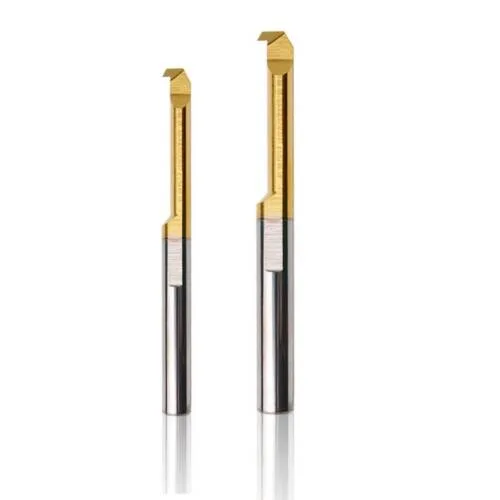
Why deep copper holes drift
Long drills and low-rigidity holders can bend under cutting force. If chips are not evacuated, the tool rubs and pushes sideways. In copper, material can smear on the cutting edge, which increases cutting force and worsens hole shape.
Use drilling and boring as separate jobs
When the bore is deep and tolerance matters, the drill should remove material efficiently and leave a controllable condition. The finishing operation should then correct size and surface finish. Trying to make a long, accurate copper bore with a weak drill alone can lead to tapered holes and repeat rework.
- Use a rigid holder and short tool projection wherever possible.
- Use coolant or air to keep chips moving out of the bore.
- Check whether the hole is larger at the mouth than at depth.
- Use boring when the drilled hole cannot hold the final tolerance.
For a deep copper bore, HEYI can review both carbide drilling and fine boring options. Send material, depth, diameter tolerance, thread or counterbore details, chip condition, and the current tool path through the RFQ page.