


Long-overhang grooving chatter is usually a tool-body and clamping problem before it is an insert-brand problem. When the overhang approaches several times the tool diameter or shank size, small design details can decide whether the groove is stable.
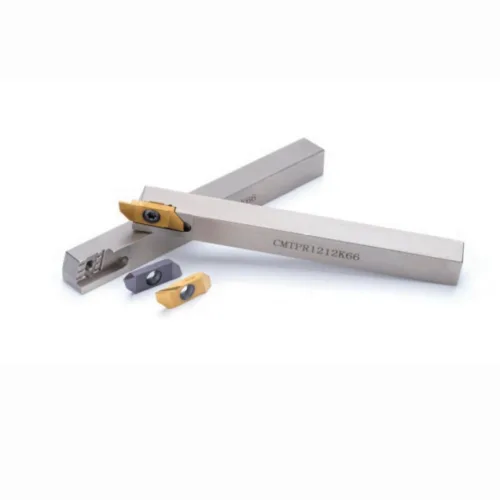
Why overhang creates chatter
Grooving concentrates cutting force in a narrow area. With long projection, the tool behaves like a lever. The cutting edge can bounce, dig in, or leave repeated marks on the groove wall. Reducing speed may quiet the cut for a moment, but it does not fix a weak tool body.
Design choices that can improve stability
- Use a tool body material and section size with enough stiffness for the projection.
- Add taper where clearance allows, so the tool is stronger near the holder.
- Keep the insert pocket and screw support rigid.
- Use a pitch and insert style that reduce vibration for the groove width.
- Add flange or face support when the machine and fixture allow it.
Do not remove too much material for clearance
Clearance is necessary to avoid interference, but excessive relief can weaken the holder. A custom design should remove only the material needed for the part geometry while keeping the load path as short and stiff as possible.
For production grooving, HEYI can review precision grooving inserts and toolholders or design custom tooling for the groove width, depth, overhang, material, and fixture. Send drawings and current chatter photos through the RFQ form.