


When a hole starts on an angled or curved surface, a standard twist drill is easy to deflect. The safer route is to create a stable entry condition first: use a flat-bottom drill, spot-face the surface, mill a small flat, or drill after a prepared pilot feature.
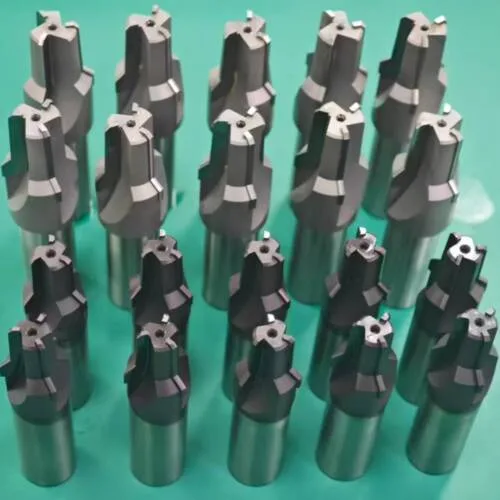
Why angled entry is difficult
A conventional drill point contacts one side of the workpiece before the other. That unequal contact pushes the drill sideways, especially when the tool is long, the setup lacks rigidity, or the surface is steep. The result may be an off-location hole, a bell-mouth entry, chatter marks, premature edge wear, or a broken small drill.
That said, not every angled hole needs a special tool. The right method depends on the angle, hole tolerance, material, depth, machine rigidity, and whether the drawing allows a small spot face.
Option 1: Use a flat-bottom drill
A flat-bottom drill with a 180 degree style point can enter an inclined or curved surface more evenly than a conventional drill. It is often used for spot-facing, cross holes, half holes, and flat-bottom holes. Feed should still be reduced during interrupted or angled engagement, then increased only after the drill is fully engaged.
This route is useful when the hole location matters and the part cannot easily receive a separate milled flat. It may also reduce the number of operations when the tool can create the entry condition and drill in one sequence.
Option 2: Mill a small flat before drilling
If the print allows it, a small end-milled flat gives the drill a stable starting surface. This is often the simplest method on a machining center. The flat does not have to be large; it only needs to provide enough entry support for the next drill or spot drill.
Use this approach carefully when the surface finish, sealing face, or final appearance matters. A visible spot face may be unacceptable on some parts.
Option 3: Use a center drill or spot drill only when it fits the setup
Spot drilling can help location on normal flat surfaces, but on a steep angled face it may still walk if the tool contacts unevenly. If the surface angle is severe, create a flat first or choose a tool designed for non-horizontal entry.
Process checks before cutting the first part
- Keep the tool short and the holder rigid.
- Reduce feed during angled entry or exit.
- Confirm the fixture prevents the part from lifting or sliding.
- Use coolant or air blast to keep chips away from the entry edge.
- Check whether burr control at the exit side matters.
For angled holes, step holes, counterbores, and special entry conditions, HEYI can review whether a standard drill, custom step drill, PCD drill, or other custom tool is the better route. Send the drawing, material, hole angle, depth, tolerance, and machine information through the RFQ page.