


A flat-bottom drill and an end mill should not be treated as the same tool just because both can touch the bottom of a hole. A flat-bottom drill is designed for axial drilling and bottom formation. An end mill is primarily a milling cutter, so plunging behavior, center cutting, chip evacuation, and bottom finish must be checked before it is used as a substitute.
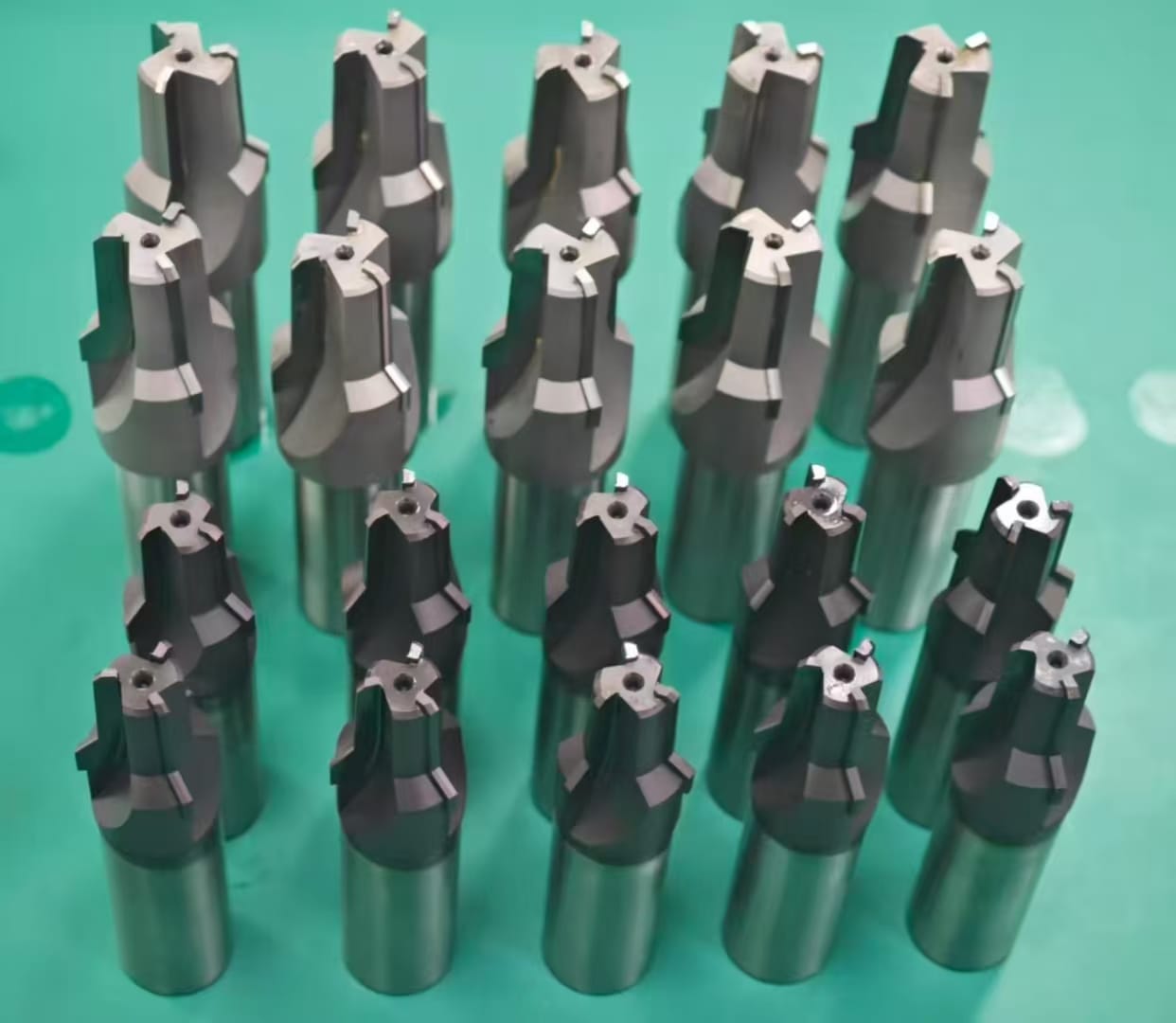
Flat-bottom drills are built for axial entry
A flat-bottom drill supports the cutting action along the hole axis. It is often used for counterbores, spot faces, shallow flat-bottom holes, and features where a standard drill point would leave an unwanted cone. The geometry helps control the bottom shape, but it still needs a suitable pilot or entry condition when the surface is angled or interrupted.
Chip evacuation is still a limit. As depth increases, the tool must move chips out through the flutes while keeping the bottom stable. Through-coolant, peck strategy, and flute design become important. If the hole is deep, small, or in sticky stainless steel, the bottom geometry alone does not solve the process.
End mills give flexibility but need support
An end mill can interpolate a pocket, clean up a counterbore, or machine a shallow flat area after drilling. It also allows diameter correction through the toolpath. That flexibility is useful when the feature is not a simple drilled hole, or when the machine must blend a flat bottom with a side wall.
The risk appears when an end mill is used as a plunge drill. Some end mills are center-cutting, but they may not evacuate chips well in a straight deep plunge. The center of the tool has low cutting speed, and a weak setup can chatter or leave a visible center mark. If the tool is long, radial deflection can affect both size and bottom finish.
Choose by feature, not convenience
- Use a flat-bottom drill when the feature is mainly an axial hole with a flat bottom.
- Use an end mill when interpolation, side-wall control, or pocket geometry matters.
- Check whether the tool can cut at the center before programming a plunge.
- Review chip evacuation when depth grows beyond a shallow counterbore.
- For stepped or special holes, a coated brazed carbide step drill or other custom tool may reduce operations.
For general drilling and milling review, start with carbide tools. For an RFQ, send hole diameter, depth, bottom-flatness requirement, tolerance, surface finish target, material, coolant condition, and whether the operation starts from solid material or a pre-drilled hole through the Full RFQ form.