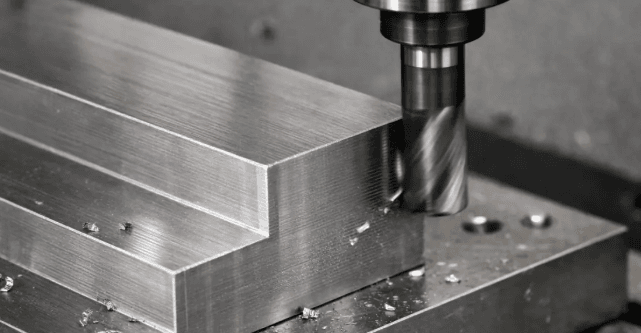
Turning surface finish is mainly controlled by feed per revolution, nose radius, edge condition, and rigidity. A larger nose radius can improve theoretical finish, but it also raises cutting force and can make a weak part vibrate or smear.

Nose radius is not always better when it is larger
A larger nose radius can leave a smoother theoretical profile at the same feed, and it gives the edge more strength. But it also increases radial force. On slender parts, thin walls, or flexible setups, that force can cause chatter, size movement, or a smeared finish.
Feed per revolution sets the visible pattern
Feed marks are part of turning. If feed is too high for the nose radius and finish requirement, the surface will show a stronger spiral pattern. Reducing feed can help, but too light a cut may rub instead of cut if the edge preparation is not suitable.
When to consider a wiper insert
Wiper geometry can improve finish at higher feed rates when the setup is stable. It is not a cure for poor clamping, worn slides, wrong center height, or a part that deflects. Use it when the machine and workholding are strong enough to support the wider contact area.
- Check finishing stock before changing insert style.
- Use a sharp enough edge for sticky or low-carbon materials.
- Reduce overhang in both tool and workpiece.
- Match chipbreaker and grade to continuous or interrupted cutting.
For insert condition checks, see HEYI’s article on turning insert wear. For production review, start with carbide turning inserts and send material, diameter, speed, feed, depth of cut, finish target, and defect photos through the RFQ form.