


Aluminum heat-sink drilling is mainly a chip evacuation, burr, and stability problem. A carbide drill can work well, but the geometry, coating, flute space, coolant or air, and machine condition must suit ductile aluminum.
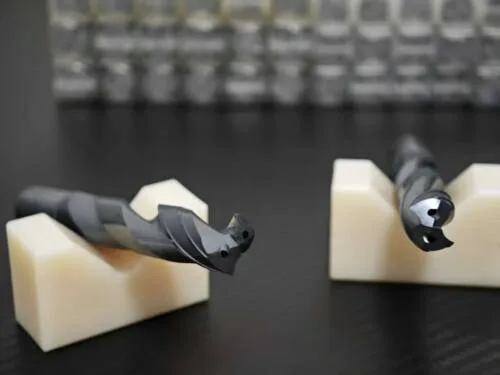
Why heat sinks are not simple blocks
Heat sinks often have thin fins, interrupted sections, or limited support near the hole. Even if the material is aluminum, the part geometry can make drilling unstable. Chips may pack in deeper holes, and soft aluminum can smear on the cutting edge.
Drill geometry and chip evacuation
A sharp, polished, free-cutting geometry is often useful for aluminum. The drill also needs enough flute space to move chips out. If chips pack, the hole wall can be scratched, the drill can run hot, and the exit burr can grow.
- Check hole depth relative to drill diameter.
- Use coolant, mist, or air in a way that clears chips from the hole.
- Watch for long chips wrapping around the tool.
- Support thin features so the drill does not push or vibrate the part.
Do not judge only by tool life
Tool life numbers from one shop may not transfer to another CNC machine, alloy, fixture, or coolant system. Use hole size, burr level, chip shape, surface finish, and machine load as the real process signals.
For size issues, see HEYI’s article on oversize and undersize drilled holes. For drilling review, start from coated through-coolant carbide drills and send heat-sink alloy, hole depth, hole count, fixture, coolant, and current drill data through the RFQ form.