


For a 9 mm deep hole in nickel-rich stainless or 304-like material, drilling and reaming must be planned together. The drill establishes hole straightness and chip evacuation; the reamer can improve size and finish, but it will usually follow the hole that already exists.
Why nickel-rich stainless is difficult
Nickel-rich stainless tends to be tough, sticky, and sensitive to heat. If chips stay in the hole, the cutting edge rubs instead of cutting cleanly. If the drill wanders, the reamer does not magically straighten the hole; it mainly sizes and finishes the path already produced.
Use the drill to create a stable reaming condition
- Keep the holder short and check runout before cutting.
- Use a drill geometry matched to stainless or nickel-rich material.
- Use through-coolant when the machine supports it.
- Leave controlled stock for the reamer instead of drilling too close to final size.
- Reduce pecking if it causes rubbing, but do not ignore chip evacuation.
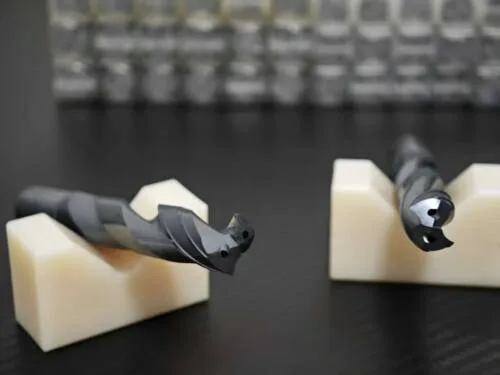
A through-coolant carbide drill is often a better starting point than a generic drill when chip evacuation and heat control dominate the problem.
Reaming stock matters
If too little material is left, the reamer can rub and burnish instead of cutting. If too much stock is left, cutting force rises and the reamer may chatter or push off. In practice, the stock allowance should be chosen by hole size, material, reamer type, and machine rigidity, then verified on the first parts.
For a 9 mm finish size, a carbide reamer review should include pilot-hole diameter, hole depth, coolant direction, target tolerance, and surface finish. For confidential alloys, provide hardness and machining behavior even if the exact chemistry cannot be shared.
RFQ data to send
Send the drawing, material family, hardness, hole depth, finish size, tolerance, current drill size, reamer type, cutting data, coolant method, and actual failure mode through HEYI’s RFQ form. That information is more useful than only asking for a 9 mm tool.